
What is mindfulness meditation? 40% less stress proven
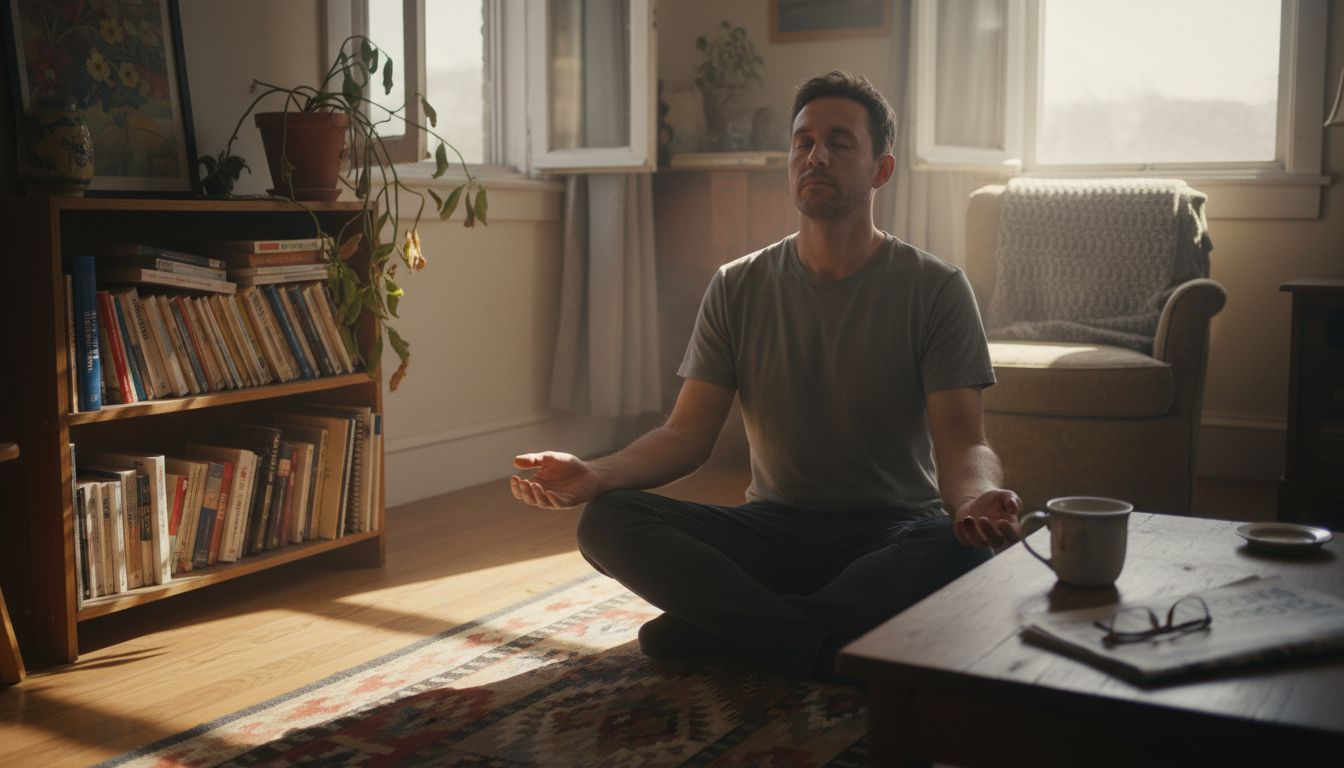
Many assume mindfulness meditation requires emptying your mind completely, but that’s a myth. True mindfulness involves gently observing thoughts, emotions, and sensations without judgment or attachment. This guide unpacks the real definition, scientific mechanisms, and practical steps to help you start a mindfulness practice that genuinely reduces stress and cultivates emotional balance.
Table of Contents
Key takeaways
Point | Details |
Core definition | Mindfulness meditation is intentional, non-judgmental awareness of the present moment including thoughts, emotions, and bodily sensations. |
Brain changes | Regular practice activates prefrontal cortex and insula while reducing amygdala reactivity, supporting emotional regulation. |
Stress reduction | Studies show sustained mindfulness practice can reduce perceived stress by 30 to 40 percent. |
Beginner approach | Start with 10 to 15 minutes daily focusing on breath, body scan, and observing thoughts without attachment. |
Unique emphasis | Unlike focused attention or mantra-based methods, mindfulness emphasizes open monitoring of present-moment experience. |
Definition and core principles of mindfulness meditation
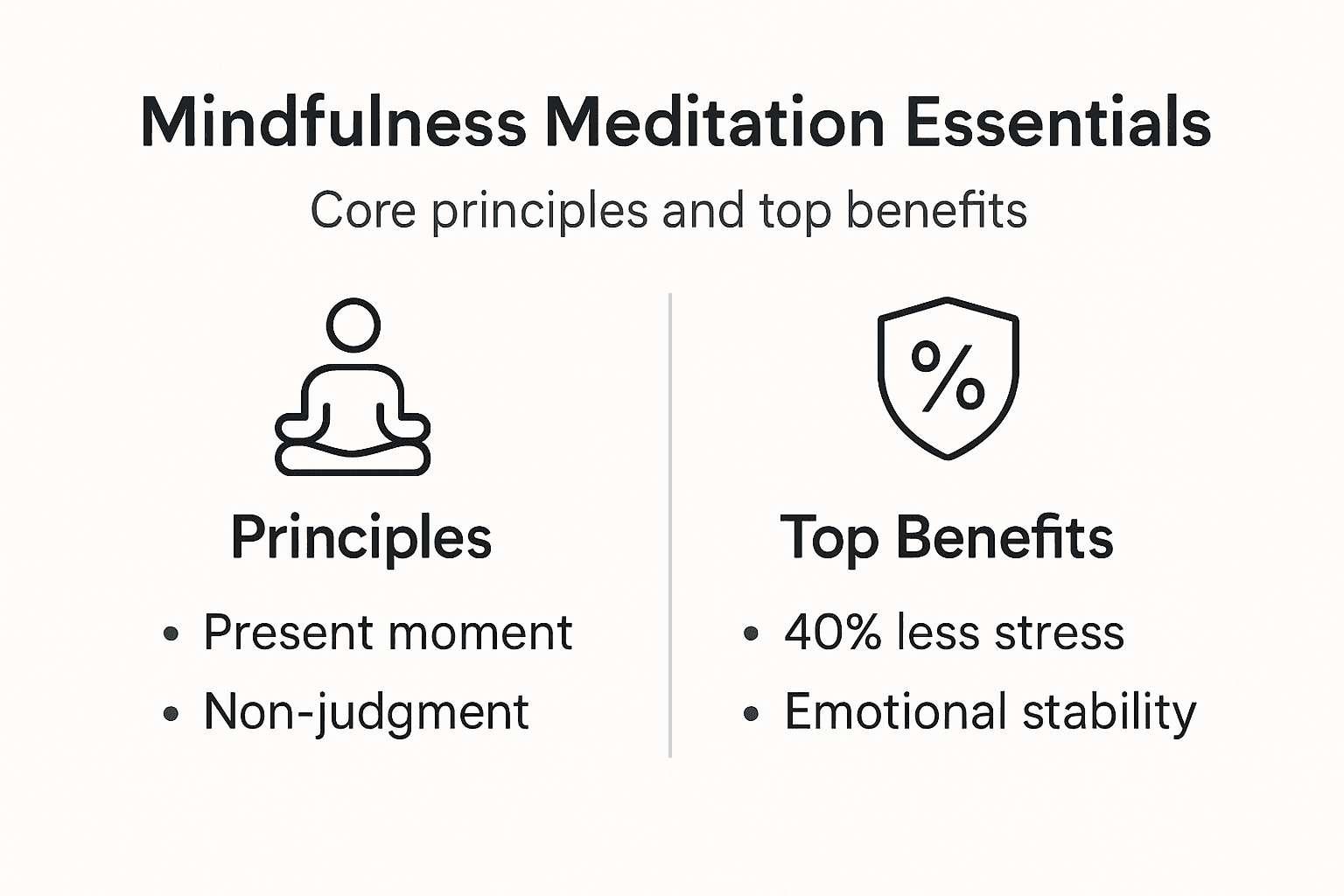
Mindfulness meditation is defined as the intentional, non-judgmental awareness of the present moment including sensations, thoughts, and emotions. This practice requires active engagement, not passive daydreaming or mental blankness. You deliberately direct attention to your current experience without labeling it as good or bad.
Researchers organize mindfulness around three core pillars. The Attention Regulation, Body Awareness, and Emotional Regulation triad forms the conceptual framework clinical programs use to teach mindfulness. Attention regulation trains you to notice where your mind goes and gently return focus to the present. Body awareness deepens connection to physical sensations, anchoring you in the now. Emotional regulation develops the capacity to observe feelings without being swept away by them.
Key principles include:
Intentionality: You actively choose to pay attention rather than letting your mind wander on autopilot.
Non-judgment: You observe experiences without categorizing them as desirable or undesirable.
Present-moment focus: You anchor awareness in what’s happening right now, not past regrets or future worries.
Acceptance: You acknowledge reality as it is without attempting to force change immediately.
This active, structured approach distinguishes mindfulness from simple relaxation or zoning out. You’re training mental muscles, building capacity for sustained awareness that carries into daily life beyond formal practice sessions.
Neurobiological mechanisms of mindfulness meditation
Mindfulness meditation activates brain regions associated with attention regulation, emotion regulation, and self-awareness such as the prefrontal cortex and insula. These neural structures grow denser and more connected with consistent practice. MRI studies reveal measurable structural changes in practitioners’ brains after just eight weeks of regular meditation.
The prefrontal cortex, your brain’s executive control center, strengthens its ability to direct attention and make conscious choices. Meanwhile, the insula enhances interoceptive awareness, your capacity to sense internal bodily states. This heightened body awareness helps you recognize stress signals early before they escalate.
Critical changes also occur in the amygdala, your brain’s alarm system for threats and stress. Regular mindfulness practice decreases amygdala reactivity, meaning you experience less automatic fear and anxiety in response to triggers. This reduced reactivity translates directly into improved emotional regulation in everyday situations.
Key neurobiological effects include:
Increased gray matter density in attention and emotion regulation areas
Stronger connections between prefrontal cortex and limbic structures
Reduced amygdala volume and reactivity correlating with lower stress
Enhanced default mode network regulation improving self-referential thought patterns
These brain changes create the foundation for psychological benefits. Neural plasticity, your brain’s ability to rewire itself, makes sustained transformation possible. You’re literally reshaping your brain’s architecture to support calmer, clearer responses to life’s challenges.
Quantified benefits on emotional health and stress reduction
40% Studies consistently show mindfulness meditation can reduce perceived stress by 30 to 40 percent through sustained practice. This isn’t a small effect. For someone rating their stress at 7 out of 10, a 40 percent reduction brings it down to roughly 4, a noticeable shift in daily quality of life.

Beyond stress reduction, practitioners report multiple measurable improvements. Emotional regulation becomes more consistent, allowing you to respond thoughtfully rather than react impulsively. Resilience builds as you develop capacity to face difficulties without becoming overwhelmed. Cognitive clarity sharpens as mental chatter quiets, freeing bandwidth for better decision making.
Research participants often notice changes within three to four weeks of daily practice. Enhanced focus appears first, followed by improved mood stability. By eight weeks, the structural brain changes mentioned earlier become detectable on imaging scans. These aren’t placebo effects but documented physiological transformations.
Documented benefits include:
Significant decreases in anxiety and depression symptoms
Improved sleep quality and faster sleep onset
Enhanced working memory and attention span
Reduced emotional reactivity to stressful stimuli
Increased overall life satisfaction and well-being
Combining mindfulness with complementary practices amplifies results. Intuitive journaling reduces stress hormones by 30 percent when paired with meditation, offering a powerful one-two approach for emotional balance. The synergy between reflective writing and present-moment awareness accelerates inner healing.
Step-by-step beginner’s guide to mindfulness meditation
Starting a mindfulness practice requires no special equipment or beliefs, just willingness to show up consistently. A structured daily meditation routine helps beginners build sustainable habits that deliver real results.
Follow these steps for your first session:
Find a quiet space where you won’t be interrupted for 10 to 15 minutes.
Sit comfortably with spine upright but not rigid, hands resting gently.
Close your eyes or soften your gaze toward the floor a few feet ahead.
Bring attention to your breath, noticing the sensation of air moving in and out.
When your mind wanders, gently acknowledge the thought and return focus to breathing.
After a few minutes, expand awareness to include your entire body.
Scan from head to toe, noticing any sensations without trying to change them.
Observe thoughts and emotions that arise as passing events, not facts requiring action.
Before ending, take three deep breaths and slowly open your eyes.
Reflect briefly on your experience without judging it as good or bad.
Consistency matters more than duration. Ten minutes daily beats an hour once weekly. Your brain needs regular practice to build new neural pathways. Daily mindfulness processes cut depression and gain clarity when practiced steadily over weeks and months.
Pro Tip: Set a recurring calendar alert for the same time each day to anchor your practice. Morning sessions often work best before daily demands accumulate, but any consistent time builds the habit effectively.
Common misconceptions and myth-busting
Misunderstandings about mindfulness create unnecessary barriers for beginners. Correcting these myths prevents frustration and sets realistic expectations.
Myth: Mindfulness means emptying your mind. Reality: Thoughts will arise constantly during practice. Mindfulness involves observing them without attachment, not achieving a blank mental state. Your goal is awareness of thoughts, not their elimination.
Myth: Mindfulness is religious or spiritual. Reality: While mindfulness has roots in Buddhist traditions, modern clinical applications are secular and evidence-based. You don’t need any spiritual beliefs to practice or benefit from mindfulness meditation.
Myth: Mindfulness is just relaxation. Reality: Mindfulness requires active attention and effort. While it often produces relaxation as a side effect, the practice itself involves deliberately directing awareness, which can feel challenging initially.
Myth: You need special talent to meditate. Reality: Everyone experiences mental wandering and restlessness. Developing clarity through meditation is a skill anyone can learn through patient, consistent practice regardless of natural aptitude.
Myth: Benefits appear immediately. Reality: While some people notice subtle shifts after a few sessions, substantial benefits typically emerge after several weeks of regular practice. Trust the process and commit to consistency.
Understanding why self-awareness practice matters helps maintain motivation through the initial learning curve. Self-awareness forms the foundation for emotional intelligence, better relationships, and effective life choices. Mindfulness builds this capacity systematically.
Comparison with other meditation practices
Mindfulness meditation occupies a specific niche among diverse meditation approaches. Mindfulness emphasizes open, non-reactive awareness versus focused attention or mantra repetition seen in other types. Understanding these distinctions helps you choose practices aligned with your goals.
Focused attention meditation concentrates on a single object like a candle flame, sound, or visualization. Your task is returning attention to that anchor whenever distraction occurs. This builds concentration but differs from mindfulness’s broader, more receptive awareness.
Transcendental meditation uses personalized mantras repeated silently to transcend ordinary thinking. It requires formal instruction from certified teachers and emphasizes effortless transcending rather than mindfulness’s active observation. The approach and underlying philosophy diverge significantly.
Feature | Mindfulness Meditation | Focused Attention | Transcendental Meditation |
Primary technique | Open monitoring of present moment | Single-point concentration | Silent mantra repetition |
Attitude toward thoughts | Observe non-judgmentally | Return to focus object | Transcend through mantra |
Teacher requirement | Optional, self-guided possible | Helpful but not essential | Required certified instructor |
Flexibility | Highly adaptable to daily life | Structured practice sessions | Specific twice-daily format |
Evidence base | Extensive clinical research | Moderate research support | Some research, proprietary methods |
Mindfulness’s open monitoring quality makes it particularly suitable for developing emotional awareness and regulation. You’re not trying to achieve a particular state but rather cultivating clear, accepting attention to whatever arises.
Practical applications for emotional balance and inner healing
Mindfulness meditation serves as a foundation, but combining it with complementary practices accelerates emotional healing. Structured mindfulness combined with journaling and sound frequencies enhances emotional processing beyond meditation alone.
Integrative approaches work synergistically:
Mindfulness meditation builds present-moment awareness and emotional regulation capacity.
Intuitive journaling processes emotions surfaced during meditation, creating space for integration.
Sound frequency therapies using binaural beats or solfeggio tones deepen meditative states.
Body-based practices like gentle movement or breathwork release stored tension.
Intuitive journaling guides for 2026 show how reflective writing amplifies mindfulness benefits. After meditation, spend five to ten minutes writing whatever arises without censoring or structuring. This freeform expression helps process subconscious material.
Tangible outcomes from combined practices include improved productivity through better focus, reduced stress hormones measurable in saliva tests, and increased self-awareness enabling more authentic choices. Many practitioners report feeling more grounded and less reactive within their first month.
Pro Tip: Start with one primary practice and add complementary methods gradually. Trying everything at once can feel overwhelming. Master basic mindfulness first, then layer in journaling or sound work as your foundation solidifies.
Enhance your mindfulness journey with Awaken Flow Mastery
Ready to move beyond theory into consistent practice? Awaken Flow Mastery offers structured programs designed specifically for beginners seeking emotional balance through mindfulness meditation.

Our daily meditation routine guide provides step-by-step instructions that remove guesswork from building your practice. You’ll access expert insights rooted in over a decade of energy work experience, combined with evidence-based techniques proven to reduce stress and enhance self-awareness. The program includes guided audio sessions, integration practices, and journaling prompts that help you embed insights into daily life.
Whether you’re seeking clarity through meditation or following a comprehensive daily mindfulness process for 2026, Awaken Flow Mastery delivers practical tools for lasting transformation. Start your journey toward sustained inner healing and emotional balance today.
Frequently asked questions about mindfulness meditation
What is the best time of day to practice mindfulness meditation?
Morning practice works well for many people because your mind is fresh and daily demands haven’t accumulated yet. However, the best time is whenever you can practice consistently. Some prefer evening sessions to process the day’s experiences. Experiment to find what fits your schedule and energy patterns.
How long before I notice benefits from mindfulness meditation?
Most people report subtle improvements in focus and mood within two to three weeks of daily practice. Significant changes in stress levels and emotional regulation typically become noticeable after six to eight weeks. Brain structure changes appear on imaging scans around the eight-week mark. Consistency matters more than session length for achieving results.
Can mindfulness meditation help with anxiety and mood swings?
Yes, research consistently shows mindfulness reduces anxiety symptoms by 30 to 40 percent through regular practice. It helps you observe anxious thoughts without getting caught in rumination spirals. For mood swings, mindfulness builds emotional regulation capacity, creating space between triggers and reactions. Many practitioners report more stable moods within their first month.
Do I need to sit still or can I practice mindfulness while walking?
Sitting meditation builds foundational skills, but mindfulness extends to any activity. Walking meditation involves bringing full awareness to each step, breath, and sensation while moving slowly. You can also practice mindful eating, listening, or household tasks. The key is maintaining present-moment, non-judgmental awareness regardless of the activity.
What should I do if my mind keeps wandering during meditation?
Mind wandering is completely normal and expected, especially for beginners. Each time you notice distraction, gently acknowledge it and return attention to your breath or body. This noticing and returning is the practice itself, not a failure. Your capacity to catch wandering earlier and redirect attention improves with repetition. Be patient and compassionate with yourself throughout the learning process.
Recommended

Comments