
Types of meditation practices for personal growth
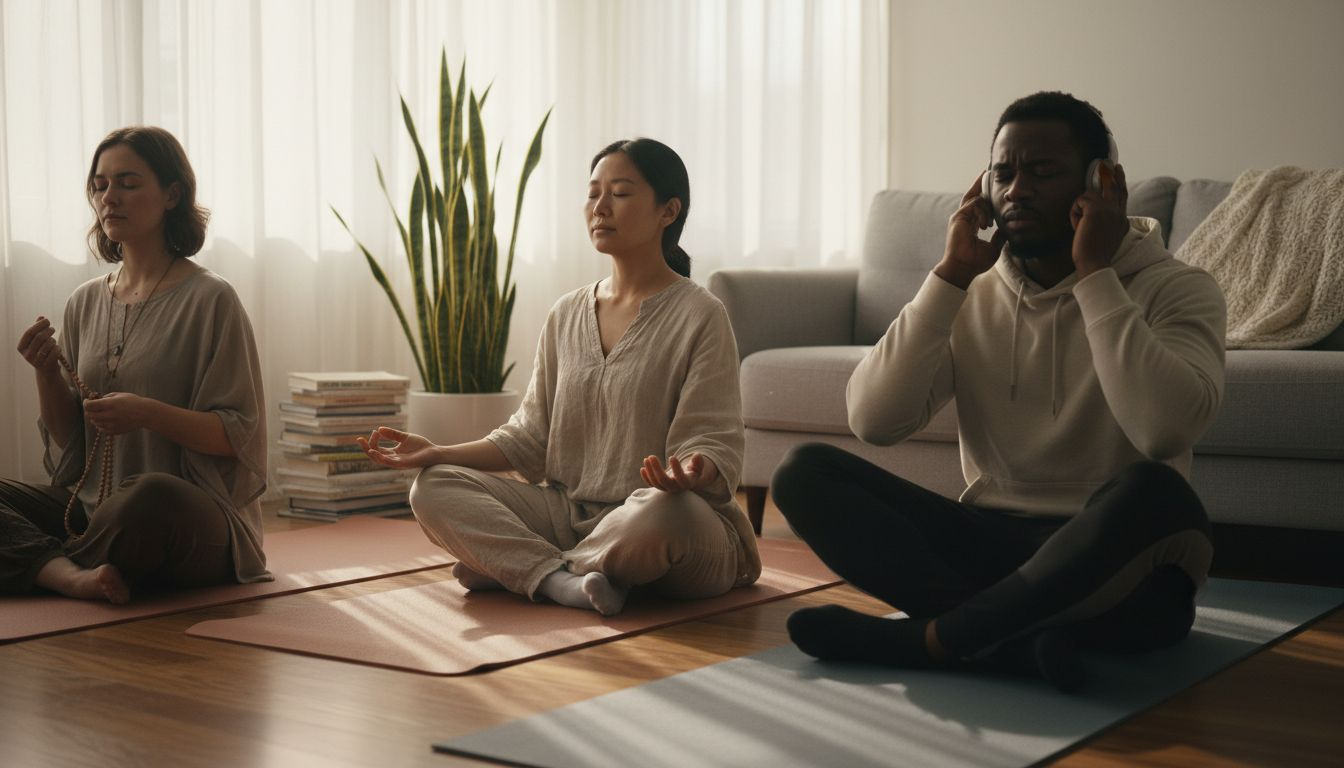
Choosing the right meditation practice can feel overwhelming when you face dozens of techniques promising transformation. Each meditation type serves different goals, from stress relief to spiritual awakening, making selection crucial for your success. This guide breaks down the essential criteria for evaluating meditation practices and examines the most effective types available in 2026. You will learn to match meditation methods to your personal growth goals and lifestyle with confidence.
Table of Contents
Key takeaways
Point | Details |
Selection criteria matter | Choose meditation based on technique focus, personal goals, accessibility, and time commitment to ensure consistent practice. |
Mindfulness offers flexibility | Mindfulness meditation reduces stress effectively and adapts to various schedules and skill levels. |
Guidance supports beginners | Guided meditation provides structure and motivation, leading to higher adherence rates for new practitioners. |
Energy methods aid transformation | Energy-based practices support spiritual growth and emotional healing through chakra work and alignment. |
Match practice to situation | Different goals require different approaches, from quick breath awareness to structured transcendental meditation. |
How to choose the right meditation practice
Selecting the right meditation practice starts with understanding five essential criteria that determine how well a technique fits your life. The technique focus represents the foundation of your practice, whether you prefer mindfulness, mantra repetition, energy work, or guided instruction. Your personal goals create the roadmap, directing you toward practices that deliver stress relief, emotional balance, or spiritual growth.
Accessibility determines how easily you can begin and maintain your practice. Some methods require formal training or specific tools, while others need only your breath and attention. Duration and frequency affect feasibility in your daily schedule. A 20-minute twice-daily commitment differs significantly from flexible 5-minute sessions.
Complementary tools like journaling or sound frequencies can enhance your meditation benefits. These elements work together with your core practice to deepen awareness and integration. Choosing the right meditation practice becomes simpler when you evaluate each option against these factors.
Pro Tip: Start with guided sessions for your first 30 days to build a solid foundation and understand proper technique before exploring independent practice.
Consider these key selection factors:
Personal goals and desired outcomes
Available time and schedule flexibility
Preference for structure versus freedom
Comfort level with spiritual concepts
Need for external guidance or tools
Mindfulness meditation
Mindfulness meditation stands as one of the most widely practiced techniques globally, offering remarkable flexibility in duration and application. This approach centers on present-moment awareness, observing thoughts and sensations without judgment. Research demonstrates that mindfulness meditation reduces stress by up to 30% over 8 weeks and improves emotional regulation.
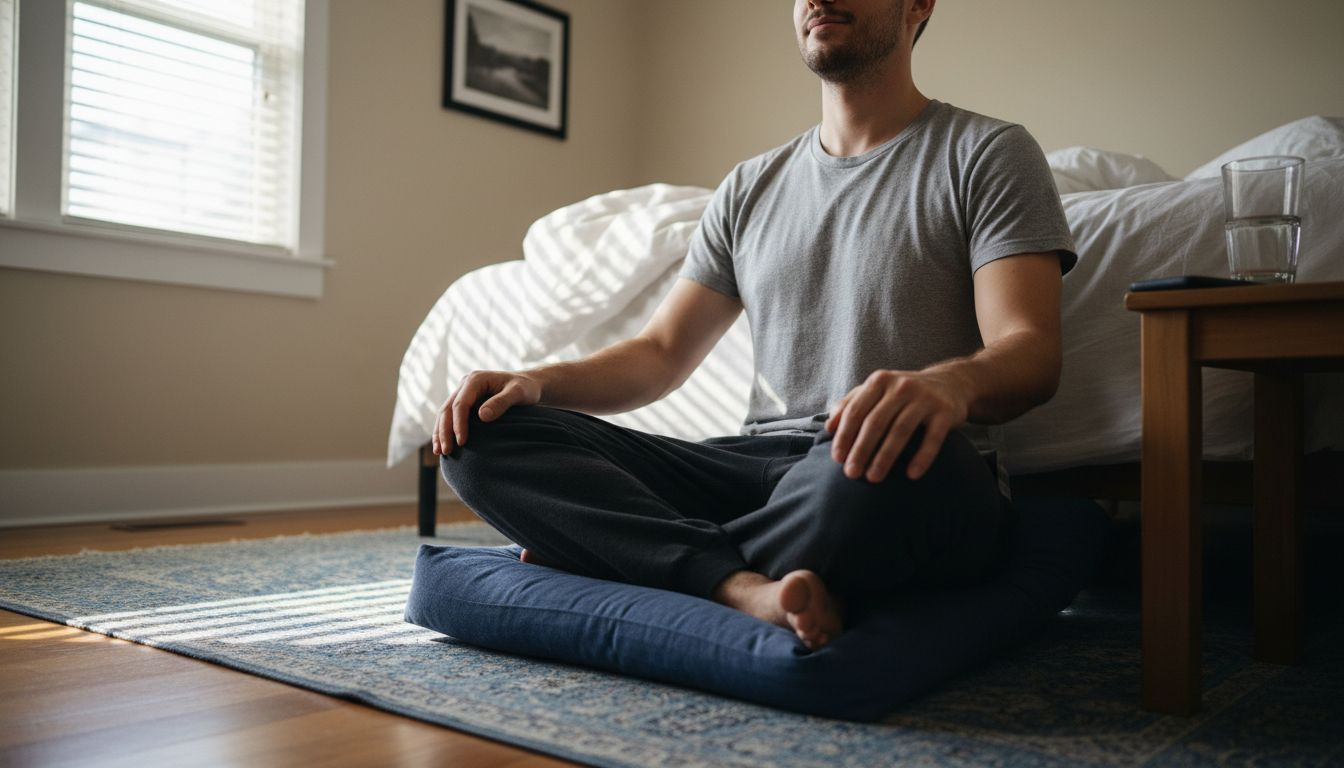
The beauty of mindfulness lies in its accessibility. You can practice with or without guidance, in secular or spiritual contexts, making it adaptable to diverse belief systems. This versatility makes mindfulness particularly suitable for people seeking emotional and mental balance without rigid structure.
You can start mindfulness practice immediately, requiring no special equipment or training. Sessions range from five minutes to an hour, fitting various schedules and commitment levels. The mindfulness meditation benefits extend beyond stress reduction to include improved focus, better sleep quality, and enhanced emotional resilience.
“Mindfulness means paying attention in a particular way: on purpose, in the present moment, and nonjudgmentally. This kind of attention nurtures greater awareness, clarity, and acceptance of present-moment reality.”
Pro Tip: Practice mindfulness meditation daily for eight weeks to observe measurable improvements in stress levels and emotional regulation, as supported by clinical research.
Key mindfulness advantages include:
Flexible duration from 5 to 60 minutes
No special equipment required
Secular or spiritual application
Strong evidence base for stress reduction
Accessible to all skill levels
Transcendental meditation ™
Transcendental meditation uses a specific mantra repeated silently during practice, creating deep relaxation through focused repetition. This technique requires two 20-minute sessions daily for optimal results, making it more structured than mindfulness approaches. The consistency of this schedule appeals to practitioners who prefer clear guidelines and measurable commitments.
Research shows that TM twice daily reduces anxiety scores by 50% over 12 weeks, demonstrating significant therapeutic potential for anxiety management. The practice leads to deep rest states that exceed normal relaxation, promoting profound stress relief and mental clarity.
TM works best for individuals seeking a disciplined, efficient practice with proven anxiety reduction benefits. The technique requires initial instruction from a certified teacher, creating a barrier to entry but ensuring proper form. While less flexible than mindfulness, TM delivers highly effective results for stress and anxiety when practiced consistently.
The structured TM practice schedule helps establish routine quickly. Many practitioners appreciate the simplicity of the technique once learned, as the mantra repetition requires minimal mental effort while producing significant benefits.
“The TM technique allows your mind to easily settle inward, until you experience the most silent and peaceful level of your own awareness. This state of deep inner silence is typically unavailable from meditation apps and other techniques.”
TM characteristics include:
Specific mantra assigned by certified teacher
Two 20-minute sessions daily
Strong evidence for anxiety reduction
Less flexible schedule requirements
Deep relaxation states beyond normal rest
Guided meditation
Guided meditation employs audio or video instructions to support practitioners through each session, making it the most beginner-friendly option available. This approach uses external prompts to direct attention, maintain focus, and provide structure throughout the practice. Higher adherence rates among beginners demonstrate the value of this supportive format.
Many guided meditations incorporate sound frequencies and journaling prompts to deepen the experience. These complementary elements enhance awareness and help integrate insights from practice into daily life. The combination supports both immediate relaxation and long-term personal growth.
Guided sessions remove the uncertainty that often stops beginners from establishing consistent practice. You simply follow the instructions, allowing the guide to direct your attention and pacing. This external structure supports motivation during early stages when independent practice feels challenging.
The guided meditation for beginners format provides clear direction at every step. You can explore various styles and teachers to find voices and approaches that resonate with your preferences. This variety keeps practice engaging while building foundational skills.
Pro Tip: Combine guided meditation with journaling immediately after sessions to capture insights and track your growth over time, deepening both self-awareness and practice benefits.
Explore more guided meditation benefits through various formats and styles. The flexibility of guided practice allows you to address specific needs, from sleep improvement to confidence building, through targeted sessions.
Guided meditation advantages:
Clear instructions throughout practice
Higher completion rates for beginners
Integration with journaling and sound
Variety of styles and durations
Strong motivational support
Energy-based meditation practices
Energy-based meditation focuses on personal energy flow and chakra alignment, emphasizing spiritual depth alongside emotional healing. These practices include chakra meditation, energy clearing, and alignment work that connects practitioners with their energetic field. The approach links directly to spiritual awakening and personal transformation.
Unlike highly structured methods, energy-based practices vary in format and intensity. Results depend heavily on practitioner engagement and openness to energetic concepts. Practitioners report benefits including improved emotional well-being, enhanced intuition, and deeper self-connection.
These methods suit individuals comfortable with spiritual and energetic concepts who seek more than stress reduction alone. The practices often incorporate visualization, breathwork, and body awareness to perceive and influence energy patterns. This multidimensional approach appeals to those pursuing holistic transformation.
Energy work can stand alone or complement other meditation types. Many practitioners combine energy alignment with mindfulness or guided sessions to address both immediate stress and deeper spiritual growth. The energy-based meditation insights reveal how this approach supports comprehensive personal development.
The less rigid structure allows personalization based on individual needs and experiences. You might focus on specific chakras, work with energy clearing techniques, or practice general alignment depending on your current state and goals. This flexibility supports ongoing evolution in your practice.
Energy meditation characteristics:
Focus on chakra work and energy flow
Spiritual awakening orientation
Flexible structure and approach
Requires openness to energetic concepts
Supports deep emotional healing
Other notable meditation types: Breath awareness and loving-kindness
Breath awareness meditation requires no tools and offers immediate accessibility for stress relief. This technique focuses attention on natural breathing patterns, using the breath as an anchor for present-moment awareness. Research indicates that breath awareness reduces acute stress by 25% in as little as 5 minutes.
The simplicity of breath awareness makes it ideal for quick stress relief in any situation. You can practice while sitting, standing, or even walking, requiring only a few minutes of focused attention. This accessibility removes common barriers to meditation practice.
Loving-kindness meditation cultivates compassion and positive emotions through directed well-wishing phrases. Studies show that loving-kindness meditation increases positive emotions by 20% and reduces negative emotions by 15% after 7 weeks. The practice supports emotional balance and social harmony.
Both techniques offer distinct advantages for specific needs. Breath awareness delivers immediate stress reduction, while loving-kindness builds long-term emotional resilience and interpersonal warmth. The breath awareness benefits include enhanced emotional regulation and improved focus beyond simple relaxation.
Meditation Type | Primary Focus | Time Needed | Key Benefit |
Breath Awareness | Natural breathing | 5-15 minutes | Immediate stress relief |
Loving-Kindness | Compassion cultivation | 10-20 minutes | Emotional positivity |
Mindfulness | Present awareness | 10-30 minutes | Mental clarity |
Guided | Directed practice | 10-30 minutes | Beginner support |
Key features of these practices:
Breath awareness requires zero equipment
Effective in very short sessions
Loving-kindness builds social connection
Both support emotional balance
Accessible to complete beginners
Comparison and summary table of meditation types
Understanding how meditation types compare helps you select the practice matching your specific needs and circumstances. This comprehensive comparison organizes techniques by their core characteristics, making evaluation straightforward.
Meditation Type | Technique Focus | Typical Duration | Accessibility | Primary Benefits | Best For |
Mindfulness | Present awareness | 10-30 minutes | High, no tools needed | Stress reduction, emotional regulation | Flexible schedules, stress relief |
Transcendental | Mantra repetition | 20 minutes twice daily | Medium, requires training | Deep relaxation, anxiety reduction | Structured routine seekers |
Guided | Following instructions | 10-30 minutes | Very high, beginner-friendly | Motivation, consistent practice | Beginners, those needing direction |
Energy-Based | Chakra and energy work | 15-45 minutes | Medium, spiritual openness | Spiritual growth, emotional healing | Transformation seekers |
Breath Awareness | Natural breathing | 5-15 minutes | Very high, anywhere | Quick stress relief | Busy schedules, immediate needs |
Loving-Kindness | Compassion phrases | 10-20 minutes | High, simple technique | Positive emotions, social warmth | Emotional balance, relationships |
The table reveals clear patterns in meditation approaches. Techniques requiring formal training or spiritual frameworks offer specific benefits but create access barriers. Simple methods like breath awareness trade depth for immediate availability.
Your ideal practice balances accessibility with goal alignment. Someone seeking spiritual awakening accepts the learning curve of energy work, while a busy professional values breath awareness simplicity. The meditation types comparison helps clarify these tradeoffs.
Consider how technique characteristics match your lifestyle constraints and growth objectives. Duration requirements affect daily feasibility, while accessibility determines how quickly you can begin seeing results.
Which meditation practice should you choose? Situational recommendations
Your specific situation determines which meditation type delivers optimal results. These scenario-based recommendations guide your selection based on common goals and circumstances.
For stress reduction and flexible practice, mindfulness meditation offers the best combination of effectiveness and adaptability. The technique fits various schedules while delivering proven stress relief without requiring special tools or training.
Beginners needing structure and motivation thrive with guided meditation. The external direction removes uncertainty and supports consistent practice during the critical habit-formation period. Guided sessions also introduce various techniques, helping you discover preferences.
Spiritual growth seekers benefit most from energy-based practices that address consciousness expansion alongside stress management. These methods support the deeper transformation sought by practitioners pursuing awakening and energetic alignment.
When you need quick, tool-free stress relief, breath awareness provides immediate results anywhere. The five-minute sessions fit even the busiest schedules while delivering measurable stress reduction.
Personal transformation and enhanced self-awareness require guided meditation combined with journaling. This pairing captures insights and tracks growth over time, accelerating development through reflection and integration. The situational meditation recommendations provide additional context for matching practices to needs.
Recommendations by goal:
Stress reduction: Mindfulness or breath awareness
Beginner support: Guided meditation
Spiritual growth: Energy-based practices
Quick relief: Breath awareness
Transformation: Guided with journaling
Anxiety management: Transcendental meditation
Explore meditation resources to deepen your practice
Now that you understand the meditation types available, taking action becomes your next step toward personal growth and emotional balance. Awaken Flow Mastery offers tailored routines designed to fit your specific meditation goals and lifestyle constraints.
Our daily meditation routine guide helps you build consistent practice habits that stick. Discover how mindfulness meditation explained can transform your stress levels and emotional well-being. Gain deeper self-awareness with clarity through meditation insights that accelerate your journey. Start or advance your meditation practice today with resources designed for real transformation.
What are the easiest meditation types for beginners?
What are the easiest meditation types for beginners?
Guided meditation and breath awareness represent the easiest starting points for new practitioners. Guided sessions provide clear instructions throughout practice, removing uncertainty about technique and pacing. Breath awareness requires no training, allowing you to begin immediately by simply observing your natural breathing. Both methods offer quick wins that build confidence and motivation. The meditation for beginners approach emphasizes these accessible techniques to establish strong foundations.
How long should I meditate daily to see benefits?
Even five to ten minutes daily can reduce stress effectively, depending on your chosen technique. Breath awareness delivers results in sessions as short as five minutes, while mindfulness shows benefits with ten to fifteen minutes of daily practice. Consistency matters more than session length for building long-term benefits. Research supports that regular short sessions outperform occasional long sessions for stress reduction and emotional regulation. Start small and increase duration gradually as your practice deepens.
Can I combine different meditation practices?
Combining meditation methods can enhance benefits and keep your practice engaging over time. Many practitioners pair mindfulness with loving-kindness or add energy work to guided sessions. Ensure your combined practices support complementary goals rather than conflicting approaches. Avoid practice overload by maintaining a manageable total time commitment that fits your schedule. Combining guided meditation with journaling proves particularly effective for personal growth and self-awareness development.
Is meditation effective for emotional balance?
Multiple meditation types improve emotional regulation and build resilience against stress and negative emotions. Mindfulness meditation demonstrates strong clinical support for emotional benefits, reducing reactivity and enhancing response flexibility. Loving-kindness practice specifically targets positive emotion cultivation and social connection. Research confirms that consistent practice over eight weeks produces measurable improvements in emotional well-being and mental health markers. The emotional balance and meditation connection grows stronger with regular, sustained practice across various techniques.
Recommended

Comments