
Why reduce stress with meditation for lasting relief
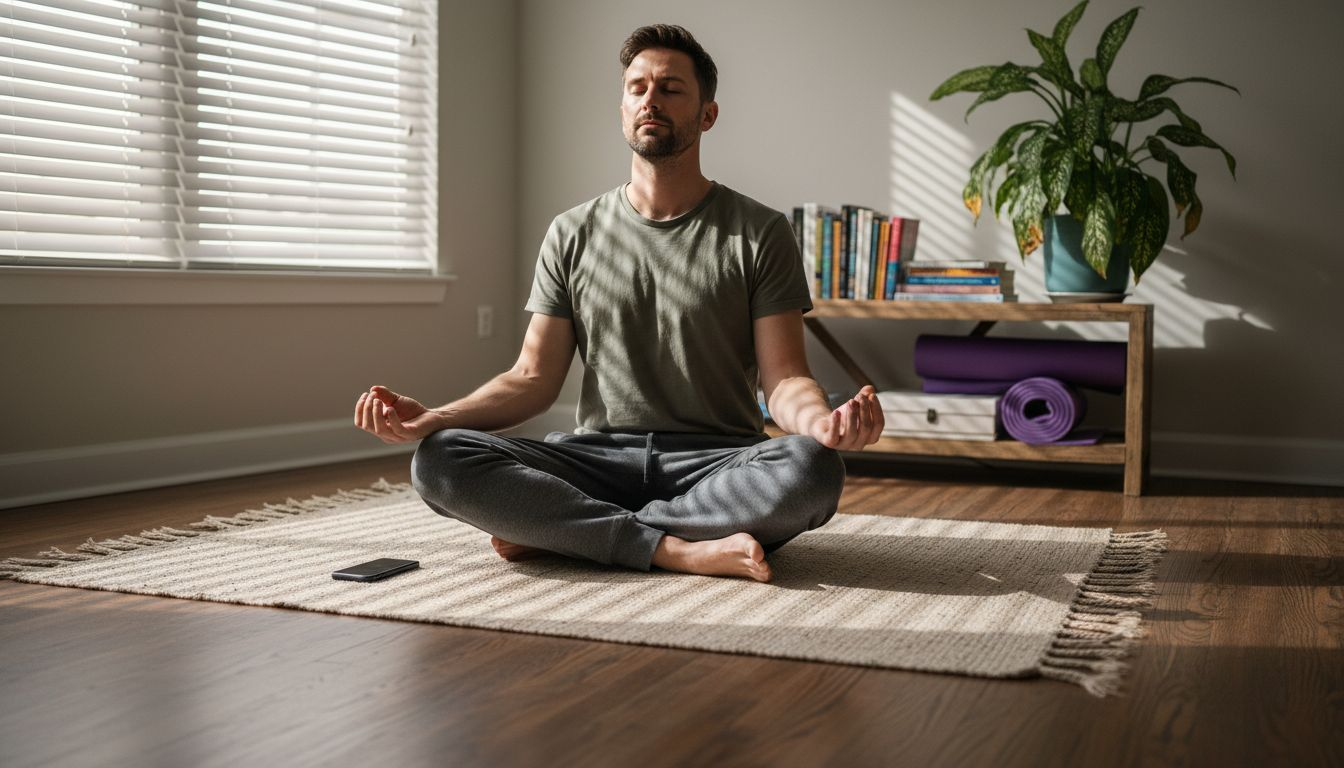
Chronic stress affects over 70% of adults, yet meditation can lower cortisol by 23% through simple daily practice. This biological shift isn’t mystical. Your brain physically rewires to handle pressure better, activating relaxation systems that counteract stress hormones. Understanding how meditation scientifically reduces stress empowers you to build lasting emotional resilience and reclaim your well-being.
Table of Contents
How Meditation Activates The Body’s Stress-Reduction Systems
How Meditation Changes The Brain To Improve Emotional Regulation
Integrating Meditation Into A Holistic Stress Reduction Practice
Getting Started: A Stepwise Guide To Experiencing Stress Relief Through Meditation
Frequently Asked Questions About Meditation For Stress Relief
Key takeaways
Point | Details |
Parasympathetic activation | Meditation triggers your body’s natural relaxation response, slowing heart rate and reducing cortisol levels. |
Brain rewiring | Regular practice thickens the prefrontal cortex by 5-10%, improving emotional regulation and stress recovery. |
Timeline matters | Meaningful stress reduction typically appears after 6-8 weeks of consistent daily practice, not overnight. |
Holistic synergy | Combining meditation with journaling, sound therapy, and lifestyle changes optimizes long-term stress relief. |
Myth-busting | You don’t need to empty your mind completely; focused awareness and managing intrusive thoughts work fine. |
Understanding stress and its impact
Stress comes in two forms: acute and chronic. Acute stress sparks when you face immediate challenges, like a deadline or argument. It passes quickly. Chronic stress persists for weeks or months, flooding your system with cortisol and adrenaline daily.
Physical symptoms pile up fast. Headaches, muscle tension, fatigue, and digestive issues become your new normal. Psychologically, anxiety, irritability, and difficulty concentrating take over. Your immune system weakens, making you more susceptible to illness.
Unmanaged chronic stress damages cardiovascular health, raising blood pressure and heart disease risk. Mental health suffers too, with increased rates of depression and anxiety disorders. Your productivity crashes as focus fragments and decision-making deteriorates. Quality of life erodes when stress controls your days instead of you controlling stress.
Common stress symptoms include:
Persistent headaches and muscle tension
Sleep disturbances and chronic fatigue
Digestive problems and appetite changes
Anxiety, irritability, and mood swings
Difficulty concentrating and memory issues
Weakened immune response and frequent illness
How meditation activates the body’s stress-reduction systems
Meditation flips a biological switch. When you practice, your parasympathetic nervous system takes over from the stress-driven sympathetic system. This relaxation response reduces stress symptoms by slowing your heart rate, lowering blood pressure, and reducing muscle tension.
The numbers tell the story. Studies show meditation can decrease cortisol levels by approximately 23%. Systolic blood pressure drops by up to 10 mmHg in regular practitioners. Inflammatory markers decrease, protecting your body from stress-related damage.
These aren’t subtle changes. Your body physically transforms during meditation sessions. Breathing slows and deepens. Heart rate variability improves, signaling better stress resilience. Blood flow redistributes from stress centers to areas supporting rest and repair.
Physiological Marker | Before Meditation | After 8 Weeks | Change |
Cortisol Level | 15 mcg/dL | 11.5 mcg/dL | -23% |
Systolic BP | 135 mmHg | 125 mmHg | -10 mmHg |
Heart Rate | 78 bpm | 68 bpm | -10 bpm |
Inflammatory Markers | Elevated | Reduced | -15-20% |
Mindfulness meditation stress reduction practices tap into these mechanisms naturally. You don’t force relaxation. You create conditions where your body activates its built-in stress-reduction systems.
Pro Tip: Schedule meditation at the same time daily, preferably morning or evening, to establish a consistent practice that maximizes parasympathetic activation and compounds stress-relief benefits over time.
The key lies in physiological stress marker changes that accumulate with regular practice. Each session trains your nervous system to default to calm rather than alarm.
How meditation changes the brain to improve emotional regulation
Your brain physically reshapes itself through meditation. Neuroscientists observe neuroplastic changes in prefrontal cortex tissue in regular meditators. The prefrontal cortex, your executive control center, thickens by 5-10% with consistent practice.

This matters because prefrontal cortex growth directly improves emotional regulation. You gain better impulse control, enhanced decision-making under pressure, and stronger ability to override automatic stress reactions. Your brain literally builds more capacity to manage challenging emotions.
The amygdala, your fear and anxiety center, shrinks with meditation. Activity decreases in this region, reducing reactivity to perceived threats. You still recognize danger, but you don’t overreact to every stressor as if it were life-threatening.
These brain changes explain why experienced meditators recover from stress faster. Their neural pathways for calm activation strengthen while stress pathways weaken. Self-awareness deepens as you observe thoughts and emotions without getting swept away by them.
Meditation enhancing self-awareness creates a feedback loop. Better awareness helps you notice stress earlier. Earlier recognition allows faster intervention. Faster intervention prevents stress from spiraling into chronic patterns.
The prefrontal cortex and amygdala work as partners. Enhanced prefrontal function provides top-down control over amygdala reactivity. You gain the neural infrastructure to choose calm responses instead of defaulting to panic or anxiety.
Common misconceptions about meditation and stress relief
Many people quit meditation before experiencing benefits because myths set unrealistic expectations. Let’s clear them up.
Myth: You must empty your mind completely during meditation. Fact: Focused awareness is the goal, not blank mental states. Intrusive thoughts will appear. That’s normal brain activity. The practice involves noticing thoughts and gently redirecting attention to your breath or focus point. This process itself builds emotional regulation skills.
Myth: Stress relief happens immediately after your first session. Fact: Meaningful stress reduction after 6-8 weeks of daily practice is the norm. You might feel temporary relaxation after one session, but lasting changes require consistent practice to rewire neural pathways and reset stress hormone baselines.
Myth: Meditation alone cures all stress-related issues without other interventions. Fact: Meditation works powerfully but often produces best results combined with therapy, lifestyle changes, or medical treatment for severe cases. It’s a foundational tool, not a magic bullet.
Pro Tip: Set a realistic goal of 10-15 minutes daily for 8 weeks before evaluating results, and track subtle changes like sleep quality or reaction times to notice progress you might otherwise miss.
Understanding these realities prevents frustration. Meditation community practice challenges often stem from expecting instant transformation. Patience and consistency matter more than perfect technique.
Common misconceptions include:
Believing meditation requires complete mental silence
Expecting immediate stress relief after one session
Thinking meditation replaces all other stress interventions
Assuming you’re doing it wrong if thoughts arise
Believing longer sessions always produce better results
Comparing meditation with other stress reduction methods
Different stress reduction methods work through distinct mechanisms. Understanding these helps you choose the right approach for your situation.
Meditation reduces stress by activating the parasympathetic nervous system and creating neuroplastic brain changes. It requires no equipment, costs nothing, and produces no side effects. The main challenge is building consistent practice habits and waiting for cumulative benefits.
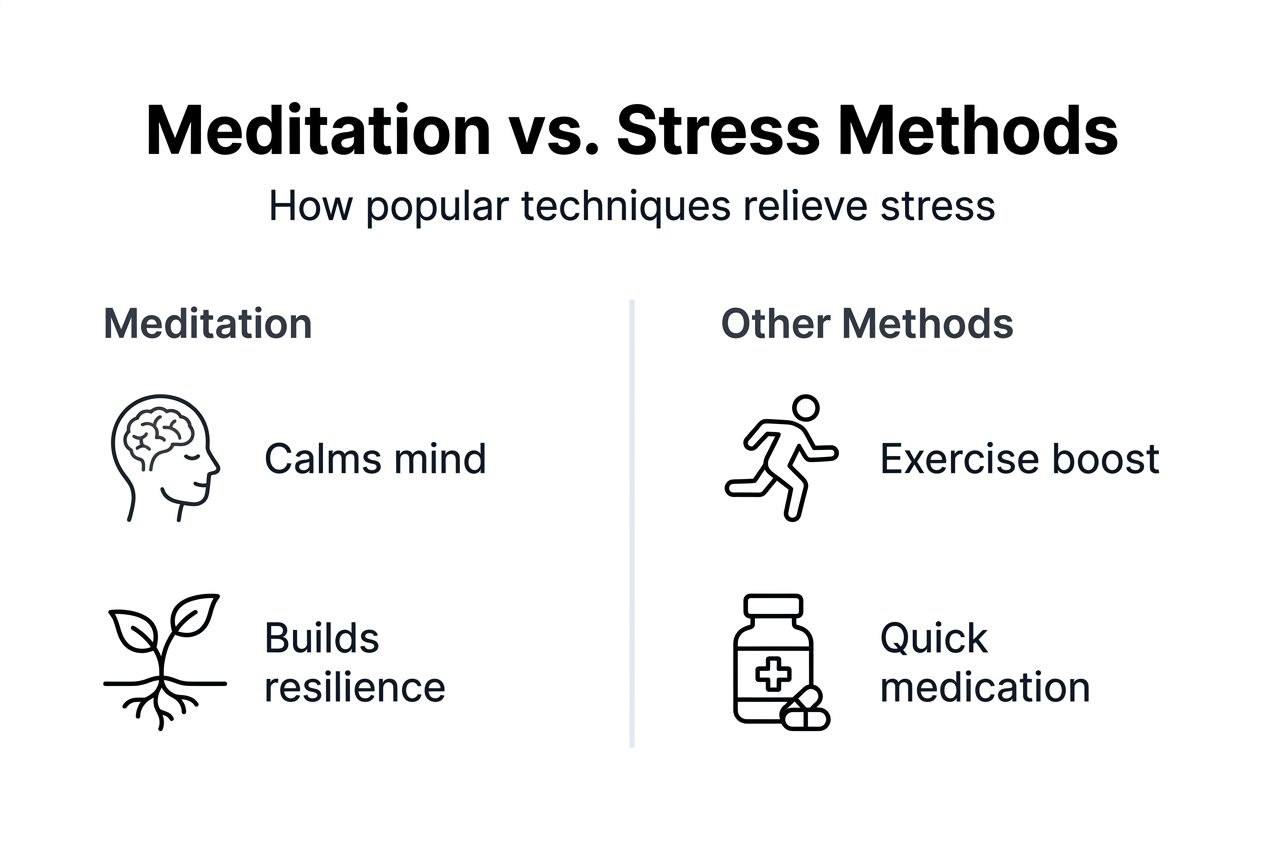
Exercise reduces stress through endorphin release, improved cardiovascular function, and metabolic regulation. Physical activity burns stress hormones directly and improves sleep quality. However, it requires physical capability, time for workouts, and carries injury risk if overdone.
Medications offer rapid symptom relief for severe anxiety or stress-related conditions. They work quickly, often within hours or days. But they require medical supervision, may cause side effects, and don’t address root causes or build long-term coping skills.
Method | Stress Reduction Effect | Pros | Cons | Best For |
Meditation | Moderate to high over 6-8 weeks | No cost, no side effects, builds skills | Requires consistency, delayed benefits | Sustainable long-term stress management |
Exercise | Moderate to high, faster onset | Physical health benefits, endorphin boost | Needs time/ability, injury risk | Active individuals seeking dual benefits |
Medication | High, rapid onset | Fast symptom relief, medically supervised | Side effects, doesn’t build skills | Severe cases needing immediate intervention |
Therapy | High over several months | Addresses root causes, professional guidance | Costly, time-intensive | Complex stress from trauma or life situations |
Mindfulness practices for beginners often combine best with exercise or therapy. Meditation excels at sustainable, side-effect-free stress management when integrated into broader lifestyle changes. The ideal approach depends on stress severity, personal preferences, and available resources.
Integrating meditation into a holistic stress reduction practice
Meditation amplifies when combined with complementary practices. Each modality strengthens the others, creating synergistic stress relief that exceeds any single approach.
Pairing meditation with intuitive journaling stress relief deepens emotional processing. After meditation quiets your mind, journaling captures insights and patterns that surface. Writing externalizes worries, making them easier to examine objectively. This combination addresses both physiological and psychological stress dimensions.
Sound therapy enhances energetic alignment during meditation. Specific frequencies entrain brainwaves to relaxation states, making it easier to access deep calm. Binaural beats, singing bowls, or guided meditations with soundscapes create auditory anchors that deepen practice.
Lifestyle practices multiply meditation benefits. Quality sleep consolidates the neural changes meditation initiates. Proper nutrition provides neurotransmitter building blocks for stress resilience. Regular exercise burns residual stress hormones and improves overall nervous system regulation.
Practical integration tips:
Start your day with 10 minutes of breath-focused meditation before checking devices
Follow meditation with 5 minutes of freewriting to capture insights and release lingering thoughts
Use sound frequencies during evening meditation to signal bedtime and improve sleep quality
Schedule movement breaks between work tasks to complement morning meditation practice
Align meal timing with meditation to stabilize blood sugar and support stress hormone regulation
When you stack these practices, stress reduction accelerates. Morning meditation sets a calm baseline. Journaling processes emotions throughout the day. Sound therapy deepens evening relaxation. Sleep consolidates all the work. The cycle repeats, building momentum.
Daily meditation routine guide resources help structure this integration. Start with one or two practices, then gradually layer additional modalities as they become habitual.
Getting started: a stepwise guide to experiencing stress relief through meditation
Building a meditation practice doesn’t require special equipment or perfect conditions. Follow these steps to establish a sustainable routine that yields measurable stress reduction.
Start with guided breath-focused meditation for 10-20 minutes daily. Choose a quiet space where you won’t be interrupted. Sit comfortably with your spine straight but not rigid. Focus attention on the sensation of breath entering and leaving your nostrils. When thoughts arise, notice them without judgment and return focus to breathing. Use apps or recorded guides for structure if helpful.
Maintain consistency for 6-8 weeks to experience significant benefits. Most practitioners see stress reduction after approximately 8 weeks of daily practice. Schedule meditation at the same time daily to build habit strength. Missing occasional days is fine, but aim for 5-6 days weekly minimum.
Address common challenges like distractions and impatience. Physical discomfort often arises in early sessions. Adjust your posture rather than pushing through pain. Mental restlessness is normal. Treat it as part of the practice, not a failure. Impatience signals progress awareness, acknowledge it and continue.
Gradually explore complementary practices as comfort grows. Once basic breath meditation feels natural, experiment with body scan techniques, loving-kindness meditation, or visualization practices. Types of meditation practices for personal growth offer variety that prevents boredom and addresses different stress aspects.
Pro Tip: Use meditation apps with progress tracking and reminder notifications to maintain consistency, especially during the critical first 8 weeks when motivation fluctuates but benefits haven’t fully manifested.
Beginner mindfulness practices provide additional entry points. The key is starting simple and building gradually. Consistency trumps duration. Ten minutes daily beats one hour weekly for stress reduction benefits.
Discover transformative meditation with Awaken Flow Mastery
Ready to move beyond basic meditation into a structured program designed for lasting stress relief and personal transformation? Awaken Flow Mastery offers a comprehensive 30-day guided meditation series that integrates mindfulness, emotional clarity, and holistic well-being practices.
Our program combines daily guided meditations with intuitive journaling prompts, sound frequencies, and integration practices rooted in over a decade of energy work expertise. You’ll learn to access and sustain flow states naturally, reducing stress while enhancing self-awareness and productivity. The Awaken Flow Mastery challenge provides community support and structured progression, making it easier to build the consistent practice that science shows produces results. Explore specialized sessions like higher self meditation to deepen your connection with inner wisdom. Join thousands who’ve transformed their stress response and emotional well-being through our meditation program designed specifically for sustainable, life-changing results.
Frequently asked questions about meditation for stress relief
How long before I notice meditation reducing my stress?
Most people experience subtle relaxation after individual sessions, but lasting stress reduction typically emerges after 6-8 weeks of consistent daily practice. This timeline allows your brain to form new neural pathways and your stress hormone levels to recalibrate. Track changes in sleep quality, reaction times, and overall mood to notice progress.
Can meditation alone replace therapy for stress-related anxiety?
Meditation is powerful but works best as part of comprehensive stress management, not as a sole replacement for therapy. For mild to moderate stress, meditation may suffice. For severe anxiety, trauma, or clinical conditions, combine meditation with professional therapy and possibly medical treatment. Think of meditation as a foundational practice that enhances other interventions.
What if I can’t quiet my mind during meditation?
You’re not supposed to completely quiet your mind. Thoughts arising during meditation are normal and don’t indicate failure. The practice involves noticing thoughts without judgment and gently redirecting attention to your focus point (breath, body sensations, or mantra). This redirection process itself builds emotional regulation skills and stress resilience.
Is it better to meditate alone or join a group?
Both approaches offer benefits. Solo practice builds self-reliance and fits easily into daily routines. Group meditation provides accountability, community support, and learning from experienced practitioners. Daily mindfulness practices can be done either way. Many people benefit from starting with group guidance, then maintaining solo practice.
How does meditation work with other stress relief techniques?
Meditation complements exercise, therapy, and lifestyle changes synergistically. It enhances therapy by improving self-awareness and emotional regulation. It amplifies exercise benefits by reducing residual stress hormones. Combined with quality sleep and nutrition, meditation creates a comprehensive stress management system. The practices reinforce rather than compete with each other.
Recommended

Comments