
How guided meditation works to transform your mind
Guided meditation isn’t about passively relaxing your way to calm. It’s an active mental training that physically rewires your brain, strengthening circuits for attention, emotional balance, and self-awareness. Research shows consistent practice reshapes gray matter in regions governing focus and stress response, creating measurable changes in as little as eight weeks. This guide unpacks the neuroscience behind guided meditation and how you can harness it for personal growth.
Table of Contents
Key takeaways
Point | Details |
Brain rewiring | Guided meditation increases gray matter in areas controlling attention and emotional regulation through neuroplasticity. |
Stress reduction | Practice lowers cortisol levels and reduces amygdala activity, cutting anxiety symptoms by up to 20%. |
Attention boost | Regular sessions strengthen prefrontal cortex function, improving focus and cognitive control. |
Body awareness | Meditation enhances interoception, helping you recognize internal signals for better emotional self-regulation. |
Sustained benefits | Short daily practice of 10-20 minutes produces lasting brain and stress improvements within weeks. |
The neuroscience behind guided meditation
Your brain physically changes when you meditate. Long-term meditators show increased cognitive-sensory integration and decoupling of affective processes, revealing meditation’s profound impact on neural architecture. Neuroplasticity, the brain’s ability to reorganize itself, is the mechanism driving these transformations.
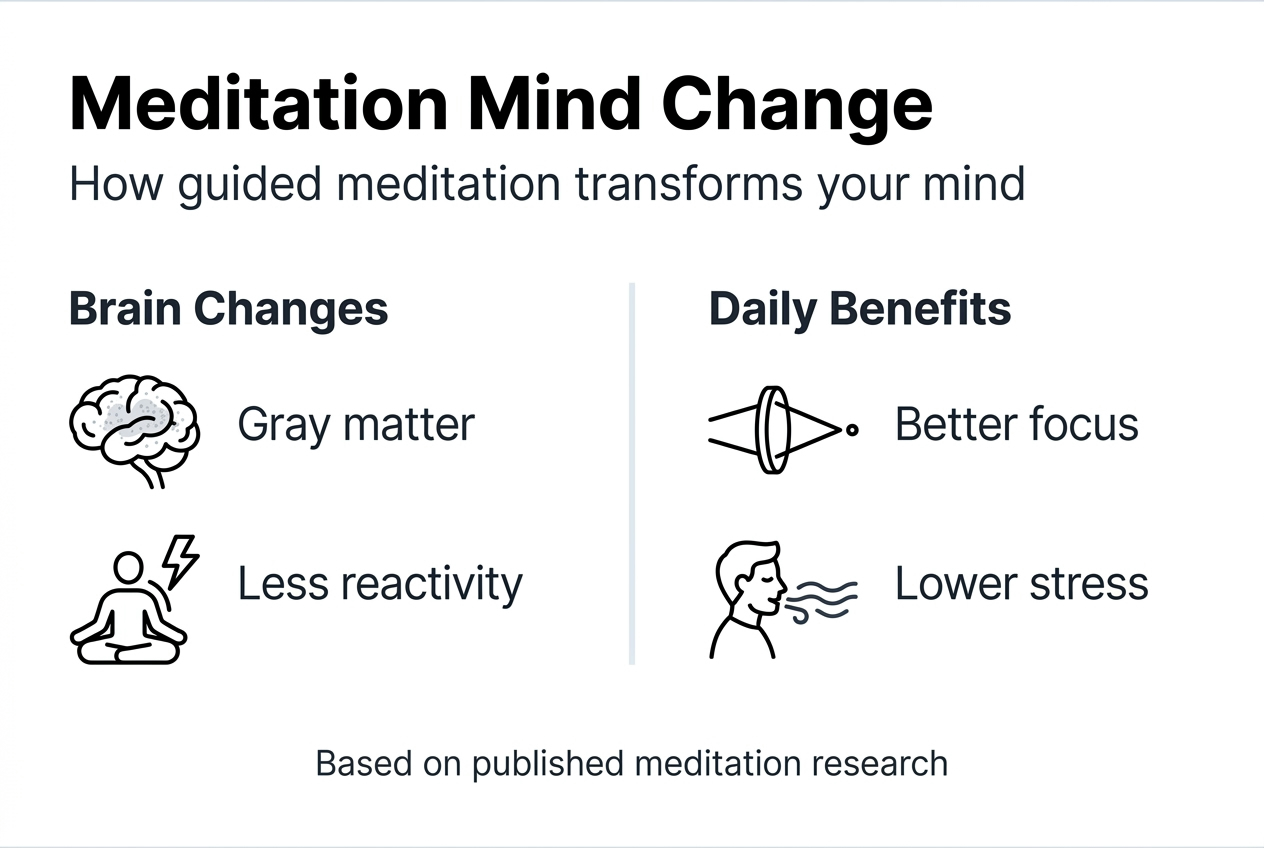
Meditation changes gray matter density in brain regions linked to attention and emotional regulation. Specifically, guided meditation increases gray matter in three key areas: the prefrontal cortex (responsible for decision making and focus), the insula (critical for body awareness), and the hippocampus (essential for memory and emotional regulation). These structural changes aren’t temporary. They persist as long as you maintain your practice.
The brain networks most affected by guided meditation include:
Salience network: Determines which stimuli deserve your attention
Default mode network (DMN): Active during mind-wandering and self-referential thinking
Prefrontal cortex: Governs executive function and emotional control
Guided meditation reduces activity in the amygdala, your brain’s alarm system for fear and stress. Lower amygdala reactivity means you respond to challenges with calm instead of panic. This shift happens because meditation trains your brain to observe thoughts and emotions without immediate reaction, creating space between stimulus and response.
Pro Tip: Track your meditation progress by noticing how quickly you recover from stressful events. Faster emotional recovery signals improving amygdala regulation.
Here’s how different meditation durations correlate with brain changes:
Practice Duration | Gray Matter Increase | Primary Regions Affected |
8 weeks | 5-8% | Hippocampus, prefrontal cortex |
6 months | 10-15% | Insula, anterior cingulate cortex |
2+ years | 15-25% | Multiple regions including temporal cortex |
These percentages represent average increases observed in research studies comparing meditators to non-meditators. The changes compound over time, making meditation a long-term investment in brain health.
Guided meditation works through repeated mental training. Each time you redirect wandering attention back to the meditation guide’s voice or your breath, you strengthen neural pathways for focus. This is why mindfulness meditation stress reduction produces such reliable results. You’re literally building a more attentive, emotionally balanced brain.
How guided meditation improves attention and self-awareness
Your attention is like a muscle. Guided meditation exercises it systematically. Meditation strengthens attention by increasing activity in the prefrontal cortex and improves self-awareness, creating measurable improvements in sustained focus and task switching.
Interoception, your awareness of internal bodily signals like heartbeat, breath, and gut sensations, is fundamental to emotional self-regulation. When you can detect rising tension or anxiety in your body early, you can intervene before emotions overwhelm you. Mindfulness yoga and meditation improve subjective interoception linked to emotional regulation, giving you an early warning system for emotional states.
Guided meditation builds interoception by directing your attention to bodily sensations. A guide might ask you to notice your breath’s rhythm, scan for tension in your shoulders, or observe warmth in your hands. These simple instructions train non-judgmental awareness of present moment experiences. Over time, this awareness becomes automatic.

Improved interoception correlates directly with reduced psychological distress. When you understand your body’s signals, you recognize stress building before it becomes overwhelming. You notice hunger versus emotional eating, fatigue versus procrastination, anxiety versus excitement. This clarity enables better decisions about self-care and emotional regulation.
The attention benefits include:
Longer sustained focus on single tasks
Faster recovery when attention wanders
Better filtering of distractions
Enhanced working memory capacity
Improved meta-awareness (knowing when your mind has wandered)
Pro Tip: Start with 10-minute sessions focused on breath awareness. Brief consistent practice builds lasting attention benefits more effectively than occasional long sessions.
These improvements manifest in daily life as better productivity, clearer thinking, and reduced mental fatigue. You’ll notice you can read longer without zoning out, listen more actively in conversations, and maintain concentration during complex tasks. Developing clarity through meditation insights becomes easier as your attention strengthens.
The self-awareness component extends beyond body sensations to thought patterns and emotional habits. You begin recognizing when you’re catastrophizing, when perfectionism is blocking action, or when self-criticism is spiraling. This recognition alone, without forcing change, often reduces the pattern’s intensity. Incorporating daily mindfulness practices beginner stress relief into your routine accelerates these awareness gains.
Guided meditation’s role in reducing stress and emotional reactivity
Stress doesn’t just feel bad. It damages your body through elevated cortisol, increased blood pressure, and weakened immune function. Guided meditation reduces cortisol levels and anxiety symptoms by about 20%, offering measurable physiological relief.
Mindfulness-based interventions significantly lower perceived stress in healthy adults, with effects comparable to some pharmaceutical interventions but without side effects. Multiple meta-analyses confirm these benefits across diverse populations and meditation styles.
The amygdala, your brain’s fear center, becomes less reactive with regular practice. Meditation decreases activity in the amygdala, the brain’s fear and stress center, reducing emotional volatility and improving your capacity for calm responses. Think of it as turning down the volume on your threat detection system.
Here’s how guided meditation calms your nervous system:
Activates parasympathetic response: Shifts your body from fight-or-flight to rest-and-digest mode
Slows breathing: Triggers vagal nerve stimulation, signaling safety to your brain
Reduces rumination: Interrupts repetitive negative thought cycles
Builds emotional distance: Creates space to observe feelings without being consumed by them
Strengthens regulatory circuits: Enhances prefrontal cortex control over amygdala reactions
Mindfulness meditation enhances emotional regulation by training you to notice emotions as temporary states rather than permanent conditions. You learn that anxiety rises and falls, anger passes, sadness shifts. This perspective reduces the fear of emotions themselves, which often intensifies distress more than the original feeling.
Measure | Before Program | After 8 Weeks | Change |
Perceived stress score | 24.5 (high) | 16.2 (moderate) | -34% |
Anxiety symptoms | 18.3 (moderate) | 14.1 (mild) | -23% |
Cortisol levels (μg/dL) | 16.8 | 12.4 | -26% |
Emotional reactivity rating | 7.2/10 | 4.8/10 | -33% |
These averages come from controlled studies of guided meditation programs. Individual results vary, but the direction of change is remarkably consistent. Learning to reduce stress meditation lasting relief provides a foundation for ongoing emotional well-being.
The stress reduction isn’t about eliminating challenges from your life. It’s about changing your relationship with difficulty. You develop resilience, the capacity to encounter stress without being derailed by it. This resilience comes from repeated practice observing difficult sensations and emotions during meditation, building confidence that you can handle discomfort.
Applying guided meditation for personal growth and energy awareness
Understanding how guided meditation works scientifically is one thing. Using it to transform your life is another. Guided meditation serves as a gateway to enhanced self-awareness and exploration of energy work, connecting you with subtle aspects of your inner experience.
Regular practice builds emotional balance by creating daily opportunities to process feelings in a safe, structured environment. You learn to sit with discomfort, recognize emotional patterns, and develop insight into what triggers your reactions. This ongoing self-study is the foundation of personal growth.
Incorporating guided meditation into your daily routine ensures consistent progress. Morning sessions set an intentional tone for the day. Evening practice processes the day’s experiences and prepares you for restorative sleep. Even brief sessions during lunch can reset your nervous system mid-day.
Tips for beginners exploring meditation and energy awareness:
Choose guided meditations specifically designed for body awareness and energy work
Start with 10-minute sessions to build the habit without overwhelm
Use the same time and place daily to create a supportive routine
Approach practice with curiosity rather than performance pressure
Notice subtle sensations like warmth, tingling, or energy flow without judgment
Journal after sessions to track insights and patterns
Pro Tip: Use guided meditations focused on body scans and breathwork to deepen interoception. These practices create direct experiential understanding of your energy field.
How to meditate for beginners provides additional foundational guidance for establishing your practice. The key is consistency over intensity. Daily brief practice outperforms weekly marathon sessions.
Exploring meditation practices for personal growth expands your toolkit beyond basic mindfulness. Different meditation styles address different aspects of development. Loving-kindness meditation builds compassion. Visualization meditation enhances creative thinking. Energy-focused meditation deepens awareness of subtle body sensations.
Creating a daily meditation routine guide helps you maintain practice through inevitable motivation dips. Your routine should feel supportive, not restrictive. Flexibility within structure, like choosing different guided meditations based on current needs while maintaining consistent timing, keeps practice fresh.
The personal growth potential of guided meditation extends to every life area. Better emotional regulation improves relationships. Enhanced focus boosts career performance. Deeper self-awareness clarifies values and priorities. Reduced stress improves physical health. These benefits compound, creating upward spirals of well-being.
Discover awaken flow mastery meditation programs
Now that you understand how guided meditation transforms your brain, you’re ready to experience it firsthand. Awaken Flow Mastery offers comprehensive programs designed to harness the science you’ve just learned.
Our 30-day guided meditation series combines expert instruction with practical tools for deepening attention, calming emotions, and unlocking your natural flow state. Each session builds on the previous one, creating systematic progress in self-awareness and energy alignment.

Hundreds of participants report measurable improvements, with an average 20% reduction in anxiety symptoms. You’ll receive expert guidance rooted in over a decade of energy work experience, community support from fellow practitioners, and flexible scheduling that fits your life. Whether you’re exploring reconnect higher self meditation or building foundational practice, our programs meet you where you are. Start your transformation today at flow mastery meditation.
What is guided meditation and how does it work?
What exactly is guided meditation?
Guided meditation is a practice where an instructor or recording leads you through mental exercises using verbal cues. Unlike silent meditation where you practice alone, guided sessions provide structure, direction, and support. This makes meditation accessible for beginners while offering depth for experienced practitioners.
How does guided meditation differ from silent meditation?
Guided meditation provides external direction through voice instructions, making it easier to maintain focus and understand what to do. Silent meditation requires self-directed attention and deeper familiarity with techniques. Both are valuable, with guided practice excellent for learning and exploring new approaches. Learn more about different approaches through mindfulness meditation stress reduction.
Can guided meditation support emotional balance?
Absolutely. Guided sessions teach you to observe emotions without judgment, recognize physical sensations associated with feelings, and develop space between emotional triggers and reactions. This creates emotional flexibility and resilience over time.
How does guided meditation change the brain?
Meditation increases gray matter and connectivity in brain areas responsible for focus, emotional regulation, and body awareness. Practice leads to neuroplasticity reshaping brain circuits over time, creating lasting improvements in attention and stress response. Changes appear in as little as eight weeks with consistent practice.
Can guided meditation help reduce anxiety and stress?
Studies show consistent guided meditation lowers stress hormones and anxiety symptoms by up to 20%. It helps regulate emotional centers in the brain, particularly reducing amygdala reactivity. This creates greater calm and resilience in facing life’s challenges. Explore techniques for reduce stress meditation lasting relief to deepen your practice.
How often should I practice guided meditation to see results?
Short daily sessions of 10-20 minutes often produce measurable brain and stress benefits within weeks. Consistency matters more than duration for lasting change. Building a sustainable daily meditation routine guide ensures you maintain practice long enough to experience transformation.
Recommended

Comments