
2026 meditation trends: deepening flow and consciousness
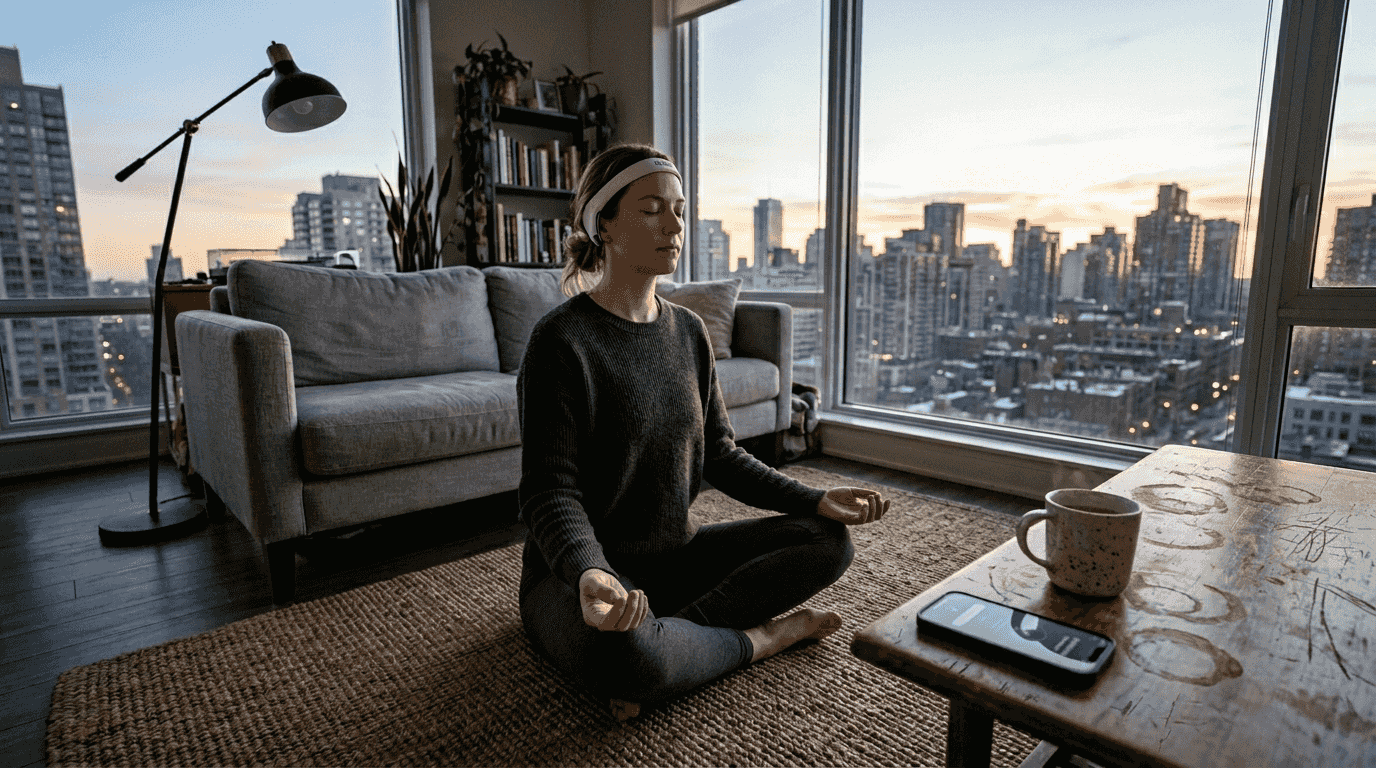
Modern meditation is shifting dramatically. Wearable neurofeedback devices enhance meditation depth by 40%, signaling a powerful convergence of ancient practice with cutting-edge technology. Creative entrepreneurs and wellness enthusiasts are leading this transformation, seeking personalized methods that blend timeless wisdom with innovative tools to unlock deeper consciousness, sustained flow states, and accelerated personal growth in an increasingly fast-paced world.
Table of Contents
Key takeaways
Point | Details |
Technology revolutionizes depth | Neurofeedback wearables and AI-driven personalization create meditation sessions tailored to your unique energetic and emotional state. |
Energy alignment boosts outcomes | Practices combining breathwork and intuitive awareness increase emotional well-being by 35% over eight weeks. |
Flow meditation elevates creativity | Creative professionals report 50% productivity gains and 60% higher creative output through targeted flow practices. |
Misconceptions limit adoption | Modern meditation includes guided sessions, group practice, and tech integration, not just silent solo sitting. |
Multi-sensory methods deepen engagement | Sound frequencies, journaling, and community practices create richer, more sustainable meditation experiences. |
Technology integration in meditation
Technology is no longer meditation’s enemy. It’s becoming the bridge to deeper states.
Wearable neurofeedback devices track brainwave patterns in real time, giving you immediate feedback on your meditation quality. When your mind wanders, these tools gently alert you, helping you return to focus faster than traditional methods alone. Studies show these devices make sessions more efficient, especially for beginners struggling with consistency.
AI-powered meditation platforms analyze your emotional patterns, stress levels, and energy fluctuations to customize each session. Instead of generic guided meditations, you receive practices designed for your current state. Feeling anxious? The AI selects grounding techniques. Need creative energy? It recommends flow-inducing protocols. This personalization removes guesswork and accelerates progress.
Sound frequencies represent another major breakthrough. Binaural beats increase alpha brainwaves by up to 25%, the brain state associated with relaxed awareness and creative insight. These carefully engineered audio tracks entrain your brain into optimal meditation states faster than silence alone.
Technology | Primary Benefit | Best For |
Neurofeedback wearables | Real-time brainwave monitoring | Beginners needing immediate feedback |
AI-customized sessions | Personalized emotional alignment | Busy professionals seeking efficiency |
Sound frequency therapy | Accelerated brainwave entrainment | Creative work and flow state access |
Guided meditation apps | Structured learning pathways | Building consistent daily habits |
Integrating technology thoughtfully prevents overwhelm:
Start with one tool at a time to avoid distraction from core practice
Use tech as training wheels, not permanent replacements for internal awareness
Combine digital feedback with traditional techniques for balanced growth
Track measurable improvements in focus, stress, and emotional regulation
Gradually reduce reliance as your natural meditation skills strengthen
Pro Tip: Pair neurofeedback sessions with daily mindfulness practices to build foundational awareness before adding more advanced tools.
The goal isn’t becoming dependent on gadgets. Technology serves as scaffolding while you develop the internal capacity to enter deep states at will. Think of it like learning to ride a bike with training wheels. Eventually, you ride freely, but the support helped you get there faster and with fewer frustrating falls.
Energy alignment as a 2026 trend
Energy alignment practices are moving from fringe to mainstream in 2026. These techniques focus on clearing energetic blockages and harmonizing your internal field with your intentions.
Energy alignment practices combined with meditation demonstrate a 35% increase in emotional well-being and sustained focus. This isn’t abstract spirituality anymore. Researchers are measuring tangible improvements in mood stability, stress resilience, and cognitive performance.
The practice combines breathwork, intuitive awareness, and body scanning to identify where energy feels stuck or depleted. You learn to sense subtle shifts in your energetic state, then apply specific techniques to restore balance. It’s like tuning an instrument before playing, ensuring all parts work in harmony.
Energy alignment meditation participants showed measurably lower cortisol levels and higher reported life satisfaction after eight weeks compared to control groups practicing traditional mindfulness alone.
Ancient wisdom meets modern validation here. Chakra systems, meridian pathways, and subtle body concepts now have scientific correlations in nervous system regulation and biofield research. You don’t need to believe in mystical energy to benefit. The practices work through physiological mechanisms we’re only beginning to understand.
How energy awareness sustains meditation benefits:
Creates sensitivity to internal signals before stress becomes overwhelming
Builds capacity to self-regulate emotions through intentional energy shifts
Enhances connection between mental intentions and physical sensations
Provides clear feedback on alignment between actions and authentic desires
Supports integration of meditation insights into daily decision making
Combining energy work with meditation isn’t replacing one with the other. They’re complementary. Meditation quiets the mind. Energy alignment clears the field. Together, they create conditions for profound transformation.
Intuitive journaling amplifies these practices by capturing energetic insights that arise during sessions. Writing immediately after meditation helps translate subtle internal experiences into conscious understanding you can apply.
Meditation for creative flow and entrepreneurship
Creative entrepreneurs face unique challenges. Their work demands sustained focus, novel thinking, and emotional resilience under uncertainty. Traditional meditation helps, but flow-specific practices deliver stronger results.
Creative professionals practicing flow meditation report 50% productivity increases and 60% higher creative output compared to general mindfulness approaches. The difference lies in intentional state design rather than passive awareness.

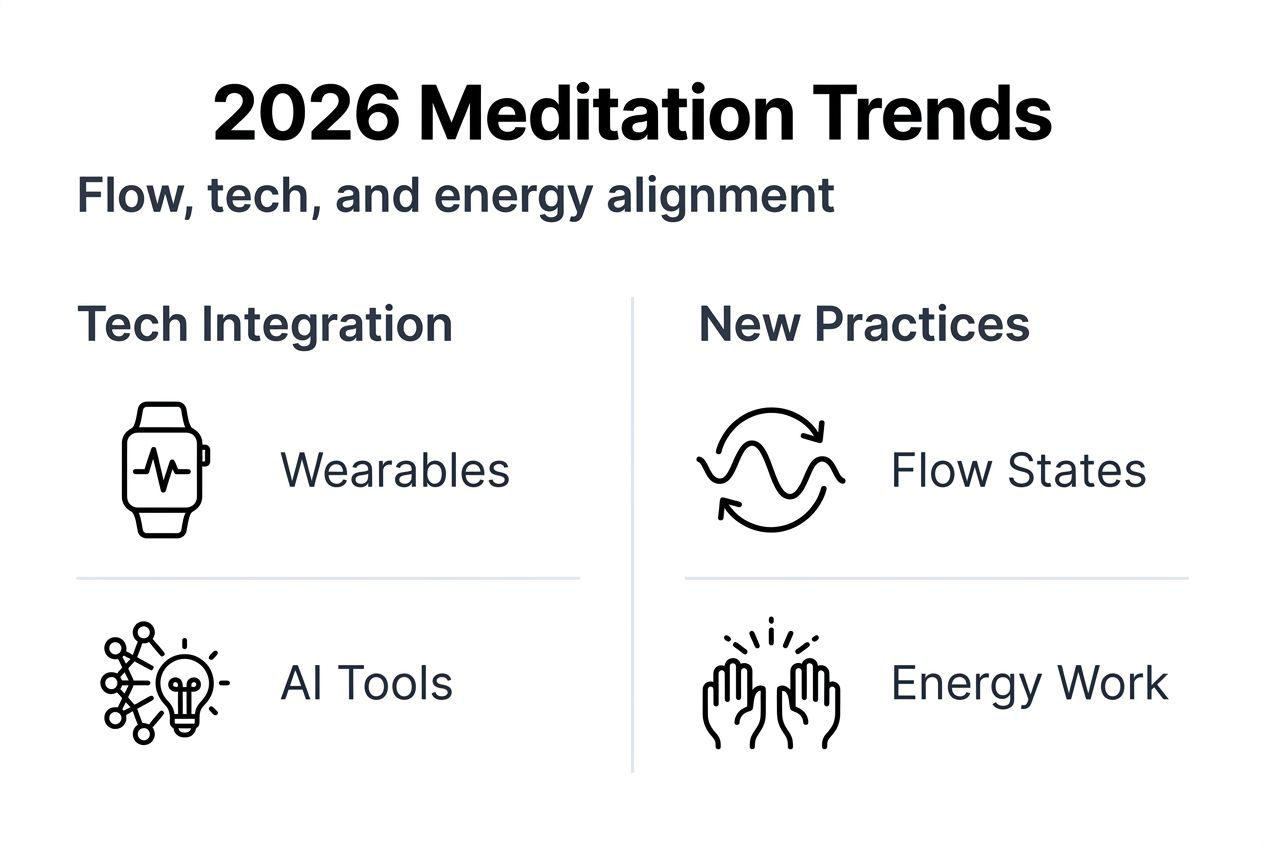
Flow meditation trains your nervous system to enter optimal performance states on demand. Instead of waiting for inspiration to strike, you cultivate the internal conditions that make flow inevitable. This involves specific breathwork patterns, visualization techniques, and energy alignment protocols designed to quiet the inner critic while amplifying creative intuition.
Meditation Type | Primary Focus | Best For | Flow State Access |
Mindfulness | Present awareness | Stress reduction | Moderate |
Transcendental | Mantra repetition | Deep relaxation | Low |
Flow meditation | Performance state | Creative work | Very high |
Loving-kindness | Emotional connection | Relationship health | Low |
Visualization | Mental rehearsal | Goal achievement | High |
Tailored techniques for high-performance mindset:
Anchor breath patterns to creative sessions for instant state recall
Use pre-work meditation rituals to signal flow readiness to your nervous system
Combine movement practices with meditation for kinesthetic flow activation
Schedule deep work immediately after morning meditation when coherence peaks
Track creative output metrics to identify which practices yield strongest results
Pro Tip: Layer sound frequencies under focused work sessions after morning meditation to maintain flow states for extended periods without mental fatigue.
The entrepreneurial mind constantly toggles between strategic thinking and creative ideation. Flow meditation creates neural flexibility, allowing smooth transitions between these modes. You become less reactive to setbacks and more responsive to opportunities.
Understanding mindfulness versus flow benefits helps you choose the right practice for specific goals. Mindfulness builds baseline awareness. Flow meditation leverages that awareness for peak performance.
Common misconceptions about meditation in 2026
Outdated beliefs keep many people from exploring modern meditation methods. Let’s clear up the most persistent myths.
Meditation isn’t only silent solo practice anymore. Group sessions improve adherence by 30% because social accountability and shared energy fields enhance individual experience. You can meditate with guidance, music, movement, or technology. The core remains the same: training attention and awareness.
Different meditation styles activate distinct neural pathways and deliver unique benefits. Assuming all meditation is identical prevents you from finding approaches that match your goals and temperament. Some practices calm the nervous system. Others energize and focus. Choose based on desired outcomes.
Not all meditation apps or technologies offer equal effectiveness. Many use generic content without personalization or evidence-based protocols. Quality matters more than convenience.
Top misconceptions limiting meditation adoption in 2026:
Meditation requires clearing your mind completely (impossible and unnecessary)
Only spiritual or religious people benefit from practice (secular applications are equally powerful)
You need 30-60 minutes daily to see results (even 5-10 focused minutes create measurable change)
Meditation is passive relaxation (many forms are active mental training)
Traditional methods are always superior to modern innovations (evidence shows technology can accelerate learning)
Evaluate meditation choices critically. Look for practices backed by research, offered by experienced teachers, and aligned with your specific growth areas. Avoid chasing trends without understanding underlying mechanisms.
Group meditation combines individual practice benefits with collective energy amplification. The shared intention field created when multiple people meditate together produces effects beyond solo sessions.
Practical applications of 2026 meditation trends
Knowing about trends means nothing without implementation. Here’s how to integrate these practices into daily life.
Step-by-step routine for modern meditation integration:
Start with 5 minutes of basic breath awareness to establish baseline practice
Add sound frequency tracks during your second week to experience entrainment effects
Introduce intuitive journaling immediately after meditation to capture insights
Experiment with one technology tool (app or wearable) in week three
Join a weekly group session (online or in-person) for community support
Gradually extend session length as your capacity for focus naturally increases
Review progress monthly using mood tracking and productivity metrics
Selecting personalized techniques aligned with your goals:
For stress reduction: prioritize breathwork and body scan meditations
For creative enhancement: focus on flow meditation and visualization practices
For emotional healing: combine energy alignment with loving-kindness methods
For spiritual growth: explore transcendental and consciousness expansion techniques
For productivity: use pre-work flow rituals and focused attention training
Pro Tip: Combine group meditation sessions with individual practice for optimal motivation and deeper states through collective energy fields.
Daily consistency beats occasional long sessions. Research shows 10 minutes daily reduces stress 30% more effectively than sporadic hour-long practices. Your nervous system responds to regular training signals, not marathon efforts.
Explore daily mindfulness practices to build foundational habits before adding advanced tools. Master the basics first. Technology and specialized methods amplify existing skills rather than creating them from nothing.
Understand different meditation types to match practices with your current growth phase. What works during periods of emotional upheaval differs from what supports creative expansion or spiritual deepening.
Seek clarity through meditation by treating practice as an ongoing conversation with your deeper self. Each session provides feedback. Listen and adjust accordingly.
Intuitive journaling after meditation helps translate internal experiences into actionable wisdom you can apply to relationships, work, and personal development.
Approach new tools with both openness and discernment. Test methods systematically. Track results honestly. Keep what works. Release what doesn’t serve your unique path.
Explore flow mastery programs for your meditation journey
Ready to experience these 2026 trends firsthand? The landscape offers more resources than ever, but quality guidance accelerates your progress dramatically.
Awaken Flow Mastery combines sound frequencies, energy alignment, and guided meditation into a comprehensive 30-day program. You’ll learn to access flow states naturally while integrating practices into daily life. The approach blends over a decade of energy work expertise with modern neuroscience, creating a bridge between ancient wisdom and contemporary tools.
Creative entrepreneurs and wellness seekers find particular value in the Awaken Flow Mastery Challenge, which provides structured daily guidance while allowing flexibility for your schedule. You’re not alone on this journey. Community support and expert facilitation help you navigate challenges and celebrate breakthroughs.
Explore reconnecting with your higher self through meditation practices designed specifically for deeper consciousness access. These aren’t generic recordings. Each session builds on previous ones, creating cumulative transformation rather than isolated experiences.
Frequently asked questions about 2026 trends in meditation
What technologies are most effective for meditation in 2026?
Neurofeedback wearables provide the strongest measurable impact by offering real-time brainwave feedback. AI-customized platforms come second, adapting sessions to your emotional state. Sound frequency therapy ranks third, accelerating brainwave entrainment. Choose based on your learning style and specific goals rather than following trends.
How does energy alignment improve meditation outcomes?
Energy alignment clears internal blockages that prevent full presence during meditation. By harmonizing your energetic field before practice, you access deeper states faster. Research shows 35% improvements in emotional well-being when combining these approaches. The practices work through nervous system regulation and biofield optimization.
Can meditation really boost creative productivity?
Yes, when using flow-specific protocols rather than general mindfulness. Creative professionals report 50% productivity increases and 60% higher creative output. Flow meditation trains your nervous system to enter optimal performance states on demand. The key is intentional state design, not passive awareness.
What are the benefits of group meditation?
Group sessions improve practice adherence by 30% through social accountability. The collective energy field created when multiple people meditate together amplifies individual experience. You gain motivation from shared intention while accessing deeper states than solo practice typically allows. Both online and in-person formats deliver these benefits.
How to start implementing tech-enhanced meditation safely?
Begin with foundational breath awareness practice before adding technology. Introduce one tool at a time to avoid overwhelm. Use devices as training aids, not permanent replacements for internal awareness. Track measurable improvements in focus and stress levels. Gradually reduce reliance as your natural meditation capacity strengthens.
Recommended

Comments